Search
(04/16/26) BATON ROUGE, La. — Our brains govern our bodies, shaping our thoughts, movements and speech. But deep in our guts are powerful signals that can influence the brain.
Ezgi Özcan, a nutritional microbiome researcher with the LSU AgCenter, is studying how diet interacts with the gut microbiome to influence brain function and neurological diseases. Her research spans the human life, looking at pediatric epilepsy to neurodegenerative diseases later in life.
Özcan recently investigated how ketogenic diets — a low carbohydrate, high fat diet — can protect against seizures in children.
Ketogenic diets have long been used to protect against seizures, but research she conducted at University of California, Los Angeles, showed that dietary fiber, long overlooked in ketogenic diets, is critical for seizure protection.
Using mice models, she and a team of researchers found that fiber-deficient infant formulas failed to protect adequately against seizures.
“We need the dietary fiber formula inside the ketogenic
formula already,” Özcan said. “When you add more fiber, actually, it increases
the seizure protection.”
Using mice models, she and a team of researchers found that fiber-deficient infant formulas failed to protect adequately against seizures.
“We need the dietary fiber formula inside the ketogenic formula already,” Özcan said. “When you add more fiber, actually, it increases the seizure protection.”
She also used innovative lab methods. Özcan created a model infant gut microbiome using nine key bacterial species. Diets were tested in anaerobic lab chambers to simulate human gut conditions to reach her findings.
Now at the AgCenter, Özcan is building on this foundation by expanding her work beyond epilepsy to see how dietary fats interact with the gut microbiome and what effects that might have on neurological diseases such as Alzheimer’s disease, noting that memory loss and epileptic seizures can occur along similar circuits in the brain.
“The ketogenic diet has been also used without considering lipids for Alzheimer’s, and how gut bacteria utilize lipids,” she said.
Tharindu Trishan Dapana Durage, a Ph.D. student working in Özcan’s MinD-Gut Lab, is trying to find certain gut microbiome signatures across different geographic areas, demographics and disease status to see if they can modulate them and slow the progression of Alzheimer’s disease.
“Even years before Alzheimer’s symptoms appear, changes start happening in the gut microbiome,” Dapana Durage said. “If we can identify those microbial patterns, we may be able to intervene earlier.”
The team in Özcan’s lab is working on creating a probiotic that can efficiently use dietary lipids to protect against some symptoms of Alzheimer’s disease.
“Ultimately, we would like to figure out precision nutrition approaches involving microbiota‑targeted therapeutics to impact neurological health and disease.”
Ph.D. student Shubhi Mishra is conducting research focused on how dietary lipids affect the gut microbiome in early infancy and how that interaction affects long-term health.
“Most of the gut microbiome — about 95% — lives in the colon,” Mishra said. “This research helps us understand how different dietary fats affect the gut barrier, which plays a big role in health.”
Mishra is using a staining technique to study samples of mice small intestines to see how the treatments they give the mice are affecting the gut epithelium, the protective and functional lining inside the intestine between the food and immune cells.
Özcan said it is important to understand how diet-microbe interaction affects our gut epithelial function because that is where communications happen between the belly and the brain.
“This communication line that happens through the vagus nerve or metabolites crossing from the epithelial barrier and traveling through the blood-brain barrier,” Özcan said. “Also 95% of the immune cells resides in our gut.”
She said these immune interactions could prime the immune system and regulate inflammation that affects health and diseases, especially neurological diseases.
Other research in her lab is focused on how cooking oils might affect the gut microbiome to signal feeding behaviors.
“Gut microbiota utilization of certain dietary compounds can affect appetite and satiety,” she said. “They signal through gut hormones or through nutrient sensing.”
Özcan said her team is looking at if certain nut oil can increase production of gut hormones, like GLP-1s, that can suppress appetite.
With the increase in use of weight loss drugs that mimic GLP-1s, natural production of the gut hormones that control appetite would be of interest.
Özcan’s work could help create diets that are tailored not just to people, but to the trillions of microbes living inside them. By understanding how food, gut bacteria and the brain communicate, the researcher hopes to target nutritional strategies that could help treat neurological disease at every stage of life.
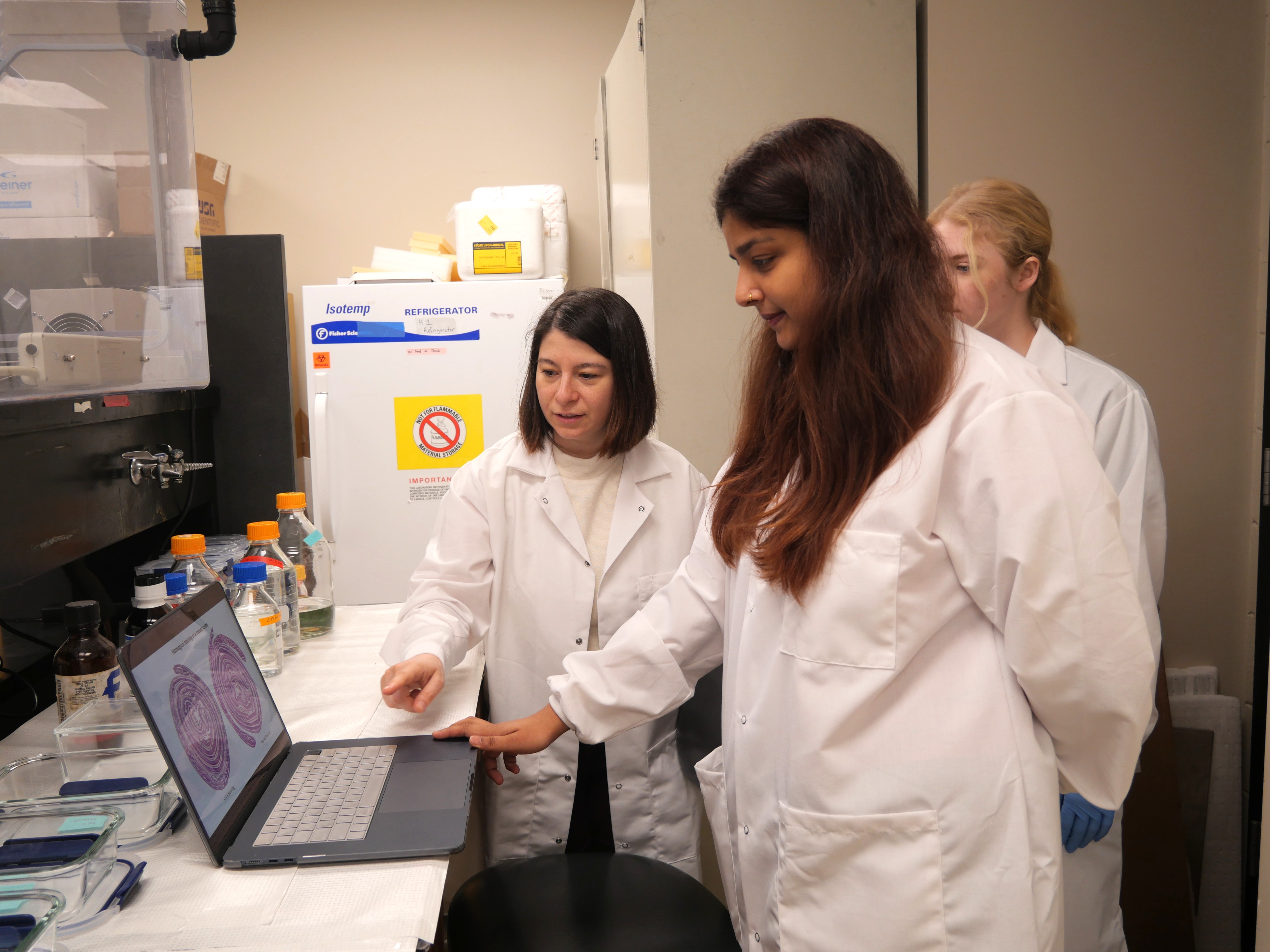
Ezgi Özcan, left, a nutritional microbiome researcher with the LSU AgCenter, reviews images of a cross section of a mouse intestine, with students Shubhi Mishra, center, and Isabella Morrow. Photo by Tobie Blanchard/LSU AgCenter
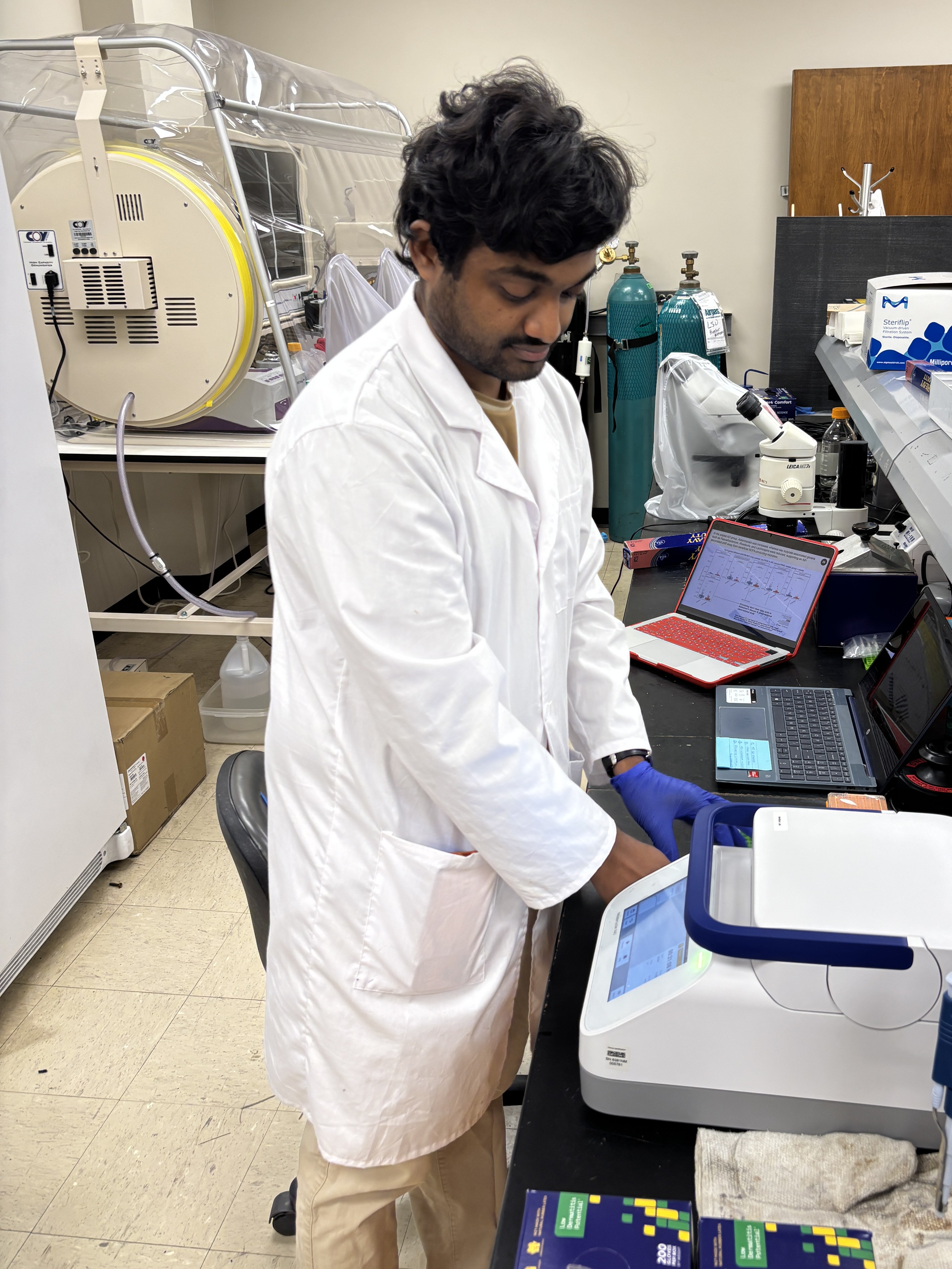
Tharindu Trishan Dapana Durage, an LSU Ph.D. student in Ezgi Özcan’s MinD-Gut Lab, is conducting polymerase chain reaction (PCR) identification of anaerobic bacteria. Photo by Tobie Blanchard/LSU AgCenter
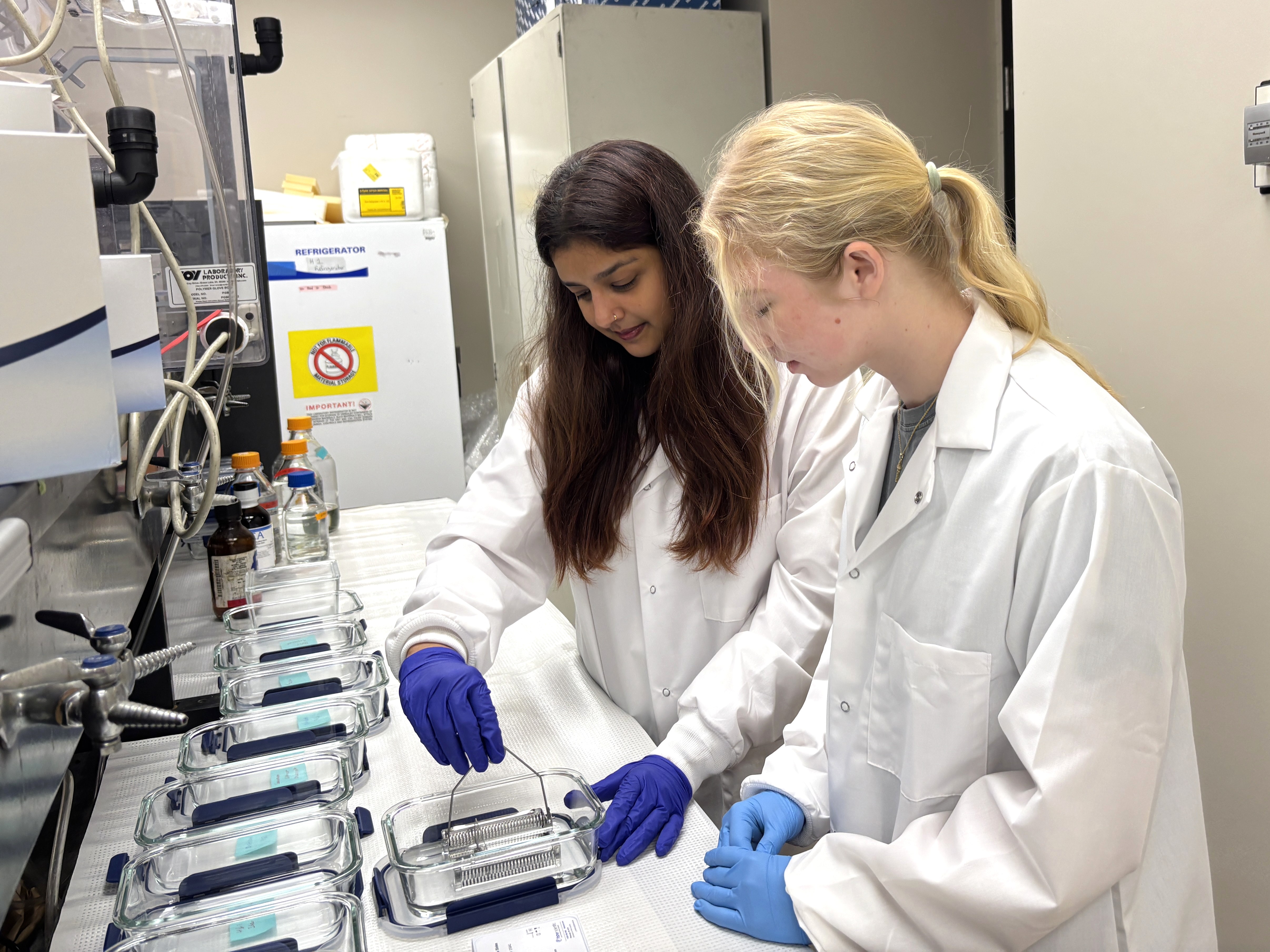
Shubhi Mishra, an LSU Ph.D. student in Ezgi Özcan’s nutrition lab, shows undergraduate student Isabella Morrow a staining technique to study a cross section of a mouse small intestines sample. Photo by Tobie Blanchard/LSU AgCenter